Today's game stop

Turn Order
Turn Order is a daily logic puzzle where you choose which piece moves next to slide or push pieces onto matching beacons, aiming to solve each board in as few moves as possible before the next daily puzzle.
Play Turn OrderA fresh puzzle is waiting for you.
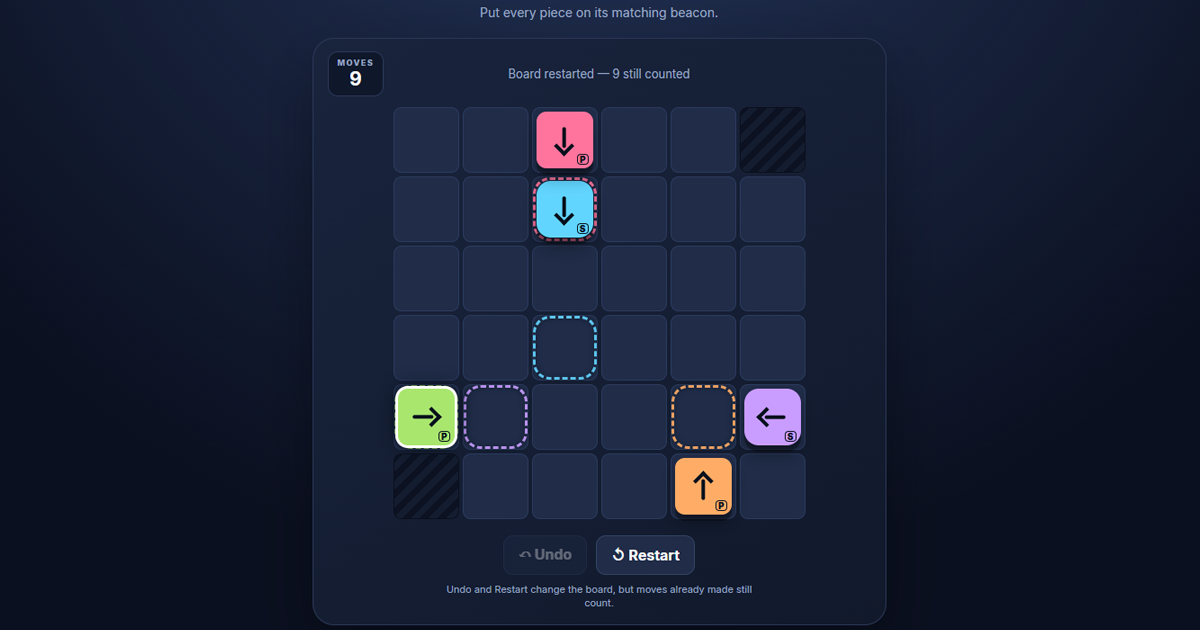
Turn Order is a puzzle about sequencing moves so pieces interact correctly. Each daily board presents movable pieces and matching beacon symbols; you tap a piece to activate it and watch how it moves. Sliders glide until blocked and then reverse, while Pushers step one square or push another piece and then turn around. The goal is to land every piece on its matching beacon in as few recorded moves as you can.
The interface tracks the number of moves you make and shows an optimal move count and a daily average for comparison. Undo and Restart change the board position but do not remove moves already counted, so every activation contributes to your final result. A piece may need to leave a beacon or act as a blocker for another piece to reach its target. You can replay previous puzzles from the archive, and completed puzzles offer options to view the optimal solution and share your result.
How to play Turn Order
- Choose Turn Order and start the daily board displayed.
- Tap any piece to activate it; the chosen piece will move immediately according to its type.
- Sliders glide straight until something blocks them, then they turn around and face the opposite direction.
- Pushers step one square forward or push the piece ahead one square, and then they turn around.
- Aim to place every piece onto the beacon that matches its symbol to complete the puzzle.
- Use Undo to revert the last position change or Restart to reset the board, but remember moves already made still count.
Tips for Turn Order
- Plan sequences so a piece can act as a blocker or clear a path for another; sometimes a piece must leave its beacon temporarily.
- Avoid unnecessary activations because Undo and Restart do not subtract from your move total.
- Use Pushers to shove obstructing pieces into favorable positions rather than activating them directly.
- Observe slider paths before activating them so you do not send them past needed blocking positions.
- Compare your moves to the displayed optimal count to know how close you are to the best solution.
Turn Order FAQ
What is Turn Order?
Turn Order is a daily logic puzzle about selecting which piece moves next to place every piece on its matching beacon; you activate pieces one at a time and use their movement behaviours to arrange the board. Sliders glide until blocked and reverse, while Pushers move or push one square and then turn around.
How do I play Turn Order?
Play by tapping a piece to activate it and using the piece types to position everything onto matching beacons; complete the board when every piece sits on its corresponding symbol. The interface counts each activation as a move and provides Undo and Restart controls that change the board but do not reduce moves already recorded.
Can I play past Turn Order puzzles?
Yes, you can replay earlier puzzles from the Puzzle Archive; archived puzzles are available for review and replay. The archive keeps your personal results for those days and does not alter that day's published statistics.
How is my score counted in Turn Order?
Your score is the number of activations you make, and Undo or Restart do not remove moves from that total. The game also displays an optimal move count and a daily average so you can compare your result to the best-known solution and the community average.
Can I share my Turn Order results?
Yes, Turn Order provides a Share result option that copies a shareable summary of your outcome to the clipboard. After sharing, a confirmation message indicates the exact text that was copied for pasting elsewhere.
What do the different pieces do in Turn Order?
Sliders glide in a straight line until something blocks them and then reverse direction, while Pushers move one square or push the piece ahead one square and then turn around. Understanding those behaviors is key to sequencing activations so pieces end up on their matching beacons.